
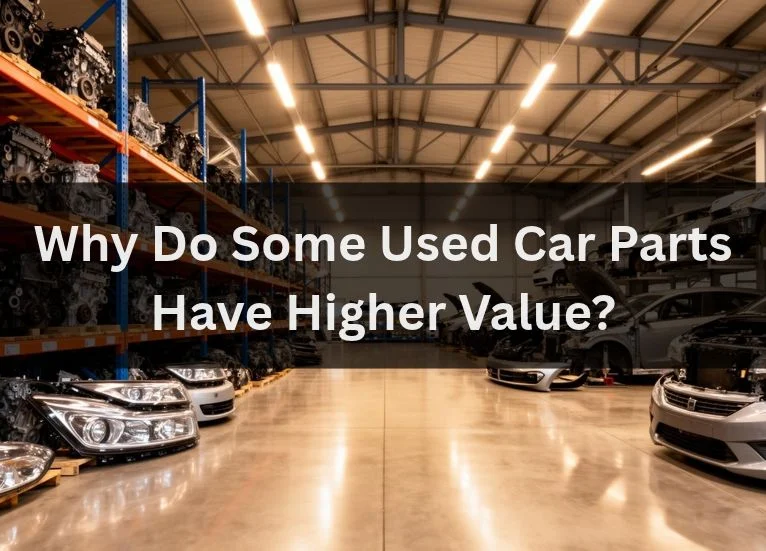
Not every used car part has the same value. Some components remain in demand because they are difficult to source, expensive to replace or compatible with many vehicles. Others may have limited reuse potential because of their condition, age or availability.
This difference becomes important when a vehicle reaches the end of its useful life. Even if a car is no longer economical to repair, some of its individual components may still be suitable for reuse.
In Perth, automotive wreckers assess unwanted vehicles to identify components that may have further practical use. Understanding what makes certain parts more desirable also explains why two similar vehicles can have different dismantling and recovery potential.
So, what makes one used car part more valuable than another? Several factors influence its potential demand and resale value.
1. Demand for Specific Replacement Parts
Demand is one of the main factors influencing the value of used automotive components.
When a vehicle model is widely used, owners may regularly need replacement parts to maintain or repair their vehicles. Used components can provide an alternative when new replacements are expensive, discontinued or difficult to source.
Some commonly sought-after components include:
- Engines and gearboxes
- Alternators and starter motors
- Headlights and tail lights
- Doors, mirrors and body panels
- Suspension components
- Electronic control modules
However, demand varies between vehicle models and individual components. A part that is difficult to find for one model may be readily available for another.
Automotive wreckers consider whether a recovered component has realistic reuse potential rather than assuming every part will attract the same level of interest.
2. Vehicle Make, Model and Production Year
The make, model and production year can significantly influence a component’s compatibility and demand.
Vehicle manufacturers regularly update designs, mechanical systems and electrical configurations. As a result, parts from two versions of the same vehicle may not always be interchangeable.
For example, a headlight assembly from an earlier model may have different mounting points, wiring connections or dimensions compared with a later version.
The same applies to engines, gearboxes, electronic modules and interior components.
Before a used part can be matched with another vehicle, important details may need to be checked, including:
- Vehicle identification number (VIN)
- Manufacturer part number
- Engine and transmission specifications
- Production year and model variant
- Electrical connections and mounting arrangements
Correct identification helps avoid compatibility problems and makes a component more useful to potential buyers.
3. Condition and Remaining Working Life
A component’s physical and mechanical condition has a direct effect on its potential for reuse.
A used part in good condition may offer a practical replacement option, while a damaged or excessively worn component may have little resale potential.
The assessment depends on the type of component.
For example, an alternator may require electrical testing to establish whether it produces the required output. A gearbox may need a more specialised mechanical assessment, while a body panel can often be visually checked for dents, corrosion and structural damage.
Other factors include:
- Cracks or broken mounting points
- Signs of corrosion
- Fluid leaks
- Excessive wear
- Damaged electrical connections
- Previous repairs or modifications
Appearance alone does not establish whether a mechanical or electronic component works correctly. Some components require specialist equipment or further inspection before their condition can be confirmed.
4. Availability of New Replacement Parts
The availability of new replacement components can influence interest in used automotive parts.
As vehicles become older, manufacturers may discontinue certain components. Finding an original replacement can become more difficult, particularly for less common models or discontinued variants.
In these situations, a suitable second-hand component may provide another option for vehicle owners.
For example, an older vehicle may require a specific interior switch, body trim piece or electronic module that is no longer readily available through ordinary parts suppliers.
However, limited availability does not automatically make a component valuable. There must also be demand, correct compatibility and confidence in its condition.
5. Original Equipment and Aftermarket Components
Another consideration is whether a component is an original equipment part or an aftermarket replacement.
Original equipment components are manufactured to the vehicle manufacturer’s specifications. Aftermarket components are produced by other manufacturers and may have different designs, specifications and quality levels.
Some vehicle owners prefer original equipment parts because they want a replacement that matches the vehicle’s original configuration.
However, an original component is not automatically more valuable than an aftermarket alternative.
Its actual condition, compatibility, availability and demand remain important.
A damaged original component may have less practical value than a suitable aftermarket replacement that is in good working condition.
6. Rarity of Certain Vehicle Components
Some vehicle components are harder to find because of limited production numbers, discontinued models or specialised specifications.
This can create demand for suitable second-hand parts.
Examples include:
- Model-specific interior trim
- Discontinued body panels
- Specialised electronic control modules
- Unique exterior fittings
- Components from limited vehicle variants
Rarity can make a component more desirable, particularly when owners have difficulty finding an exact replacement.
However, rarity alone does not guarantee a high resale value. A component still needs a potential buyer, practical compatibility and acceptable condition.
7. How Testing and Inspection Affect Reuse Potential
Before a used component is offered for reuse, its identity and condition need to be considered.
Inspection requirements differ depending on the component.
| Component | Important assessment factors |
|---|---|
| Engine | Mechanical condition, leaks and operating history |
| Gearbox | Wear, operating condition and compatibility |
| Alternator | Electrical output and physical condition |
| Starter motor | Electrical operation and mounting condition |
| Headlights | Lens condition, connections and compatibility |
| Electronic modules | Part number, compatibility and specialist testing |
| Body panels | Corrosion, dents and structural damage |
Not every component can be fully tested during an initial inspection. Some require specialist equipment, removal procedures or further assessment.
This distinction matters because a component should not be described as tested or fully operational unless its condition has actually been verified.
Proper identification and inspection help determine whether a part is suitable for reuse, requires further assessment or should instead enter an appropriate recycling process.
8. Why Damaged Cars Can Still Contain Useful Components
A vehicle does not need to be in good overall condition for some of its components to remain useful.
Consider a car involved in a front-end collision. Its bumper, bonnet and headlights may be heavily damaged, but the rear doors, seats, wheels or other components may remain unaffected.
Similarly, a vehicle with a failed engine may still contain usable body panels, mirrors, interior fittings and electrical components.
This is why automotive wreckers assess individual components rather than judging a vehicle’s entire recovery potential by its external appearance.
The extent of damage, availability of reusable parts and demand for those components all influence whether recovery is practical.
For car owners in Perth, Cash For Cars Perth service provides easy way to enquire about selling unwanted, damaged and end-of-life vehicles.
9. What Happens to Components That Cannot Be Reused?
Not every component recovered from a vehicle is suitable for another vehicle.
Parts that are excessively damaged, worn or unsuitable for reuse may need to be processed through appropriate recycling or disposal channels.
Depending on the material and available processing facilities, vehicle components may contain recoverable materials such as:
- Steel and aluminium
- Copper-containing electrical materials
- Selected automotive plastics
- Vehicle glass
- Battery materials
These materials may be separated and directed towards suitable recovery processes.
It is useful to understand the difference between component reuse and material recycling.
Reuse gives a suitable working component another practical application. Recycling recovers materials from components that can no longer serve their original purpose.
Both processes can contribute to reducing unnecessary automotive waste.
10. How Do Used Parts Influence Vehicle Assessment?
The potential value of individual components is one consideration when an car wrecker assesses an unwanted vehicle.
However, the assessment involves more than identifying a few desirable parts.
Other considerations may include:
- Vehicle make, model and production year
- Overall mechanical and physical condition
- Availability of reusable components
- Demand for compatible replacement parts
- Missing or damaged components
- Vehicle accessibility and collection requirements
- Dismantling and processing costs
This explains why two vehicles of the same model and age may receive different assessments.
One may contain several components suitable for recovery, while another may have extensive damage or missing parts.
Providing accurate information about a vehicle’s condition can help an automotive business understand what needs to be assessed.
Conclusion
Some used car parts have higher value because they are in demand, difficult to source, compatible with particular vehicles and still in suitable condition.
Factors such as vehicle specifications, component rarity, replacement-part availability and inspection results all influence their potential for reuse.
For automotive wreckers, understanding these differences helps identify which components may be recovered and reused and which materials are better suited to recycling.
It also explains why an unwanted or damaged vehicle may still contain useful components even when repairing and driving it is no longer practical.
